Government transfer of 9M student loan accounts puts your compliance at risk; act now to secure your operations and stability.
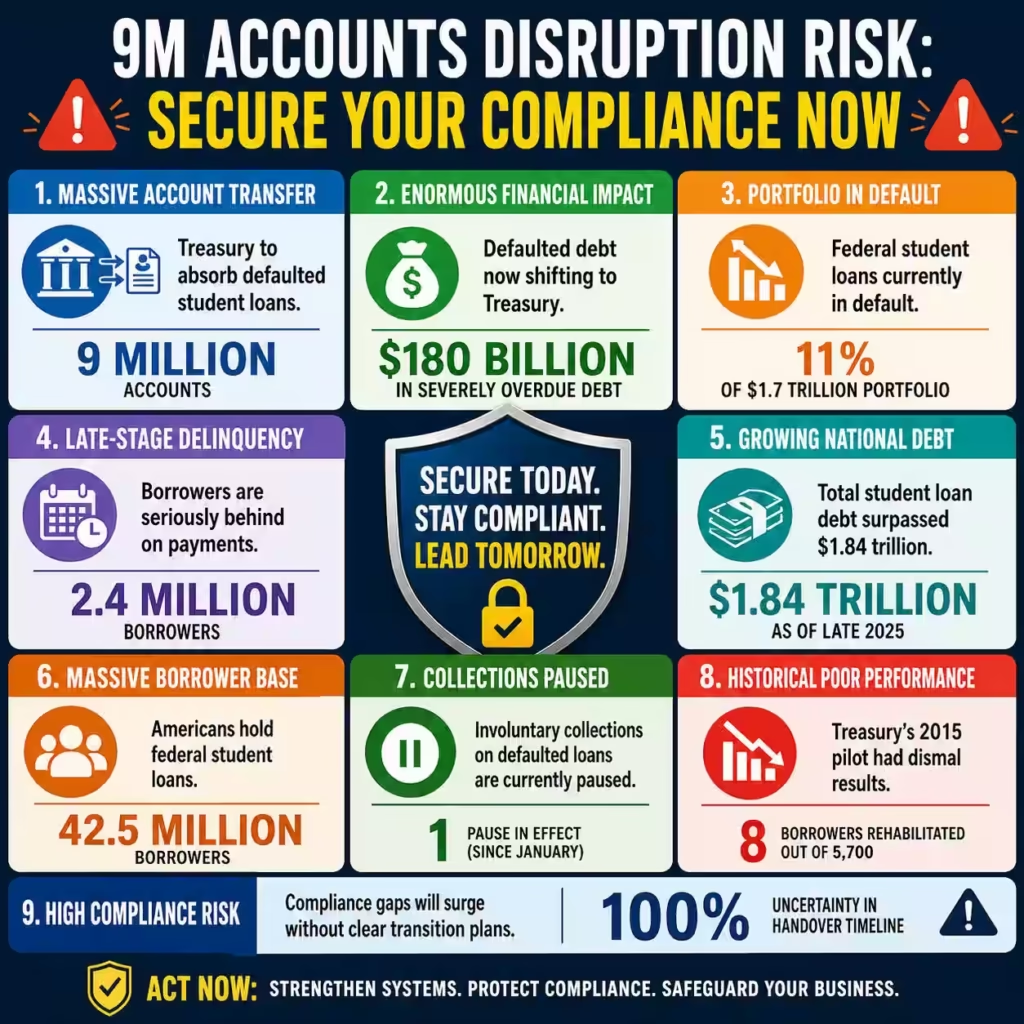
The Treasury Department recently confirmed preparations to absorb the Department of Education’s massive metric of 9 million defaulted student loan accounts. This staggering transfer directly impacts $180 billion in severely overdue federal debt currently destabilizing the national economy. Consequently, this unprecedented governmental shift creates severe operational blind spots for financial servicers navigating the complex bureaucratic maze.
Mason Champion, the Treasury assistant secretary, outlined two critical initial milestones in an April letter to Senator Elizabeth Warren. First, the agency issued a formal request for information to procure specialized agents capable of rehabilitating these distressed accounts. Second, a strategic personnel exchange sent seven Education employees to the Treasury and two Treasury officials to Education.
This administrative maneuver hits a massive pain point for B2B debt collection agencies attempting to maintain strict regulatory compliance. The sudden absence of a concrete timeline for the official handover leaves institutional stakeholders completely paralyzed regarding forward planning. However, implementing strategic compliance alignment and predictive risk frameworks can help your business navigate this impending federal transition successfully.
Current federal statistics reveal that roughly 11 percent of the government’s $1.7 trillion student loan portfolio currently sits in default. Furthermore, more than 2.4 million additional borrowers remain in late-stage delinquency on their active federal repayment accounts. These alarming figures highlight the sheer volume of distressed assets that private servicing partners must inevitably manage.
Former Education Secretary Arne Duncan heavily criticized the strategy, arguing it lacks basic educational and customer service foundations. Senator Elizabeth Warren explicitly stated the agreement damages families while offering zero empirical evidence of improving actual borrower outcomes. High-authority market analysts view this specific transfer as the foundational step in completely dismantling the Department of Education entirely.
In January, the government officially paused involuntary collections on defaulted student loans, halting wage garnishments and federal benefit seizures. Borrowers urgently require robust financial assistance to prepare for eventual repayment cycles once this temporary pause officially lifts. Servicing companies face intense pressure to overhaul their communication protocols before the new Treasury mandates aggressively resume involuntary collections.
Industry experts understand that handling defaulted educational loans requires distinct expertise completely separate from standard federal debt collection procedures. Historical pilot programs previously demonstrated that the Treasury struggles significantly with the complex nuances of specialized educational account rehabilitation. Therefore, proactive B2B vendors must develop specialized technological infrastructure to bridge the massive operational gap between these two agencies.
Financial contractors must immediately recognize that transferring such a colossal portfolio amplifies systemic confusion across the entire servicing ecosystem. The sheer scale of nine million disrupted accounts demands hyper-efficient data migration tools and extremely rigorous internal compliance audits. Consequently, visionary businesses will dominate the market by deploying advanced analytics to predict policy shifts and automate borrower outreach.
Recent market intelligence indicates that total student loan debt surpassed $1.84 trillion by late 2025, further complicating this monumental transition. With approximately 42.5 million Americans holding federal loans, the massive volume of data demands enterprise-grade cloud computing solutions. Servicers failing to upgrade their digital architecture will instantly buckle under the immense operational weight of this historic portfolio shift.
Furthermore, the administration’s stated objective to shift non-defaulted loans to the Treasury in subsequent phases signals deeper market disruptions. This multiphase approach effectively threatens the underlying business models of every major student loan servicer currently operating nationwide. Consequently, executive leadership teams must immediately initiate comprehensive risk assessments to protect their corporate assets from sweeping federal mandates.
L-Impact Solutions Critique: Analyzing The Treasury Transfer Risks
L-Impact Solutions strongly criticizes the abrupt decision to transfer the massive metric of 9 million defaulted student loans without establishing a transparent operational timeline. We believe this reckless strategy creates a devastating compliance vacuum for B2B financial servicers already operating under razor-thin margins. The total lack of foundational planning directly jeopardizes the financial stability of countless third-party collection agencies across the nation.
The primary pain point centers entirely on the severe disruption of established borrower rehabilitation protocols currently managed by Education vendors. Moving $180 billion in distressed assets into an agency historically unfamiliar with flexible educational repayment models invites systemic failure. Consequently, private contractors will inevitably bear the financial brunt of unavoidable administrative bottlenecks and drastically increased borrower legal disputes.
We identify a massive operational risk in the Treasury’s well-documented lack of experience with complex income-driven repayment calculations. During a previous 2015 pilot program, the Treasury successfully rehabilitated merely eight borrowers out of 5,700 total test cases. This dismal historical performance metric clearly indicates a profound structural gap in their current capacity to manage educational debt responsibly.
Another critical gap involves the recently paused involuntary collections, which currently block debilitating wage garnishments and tax refund seizures. When these aggressive collection tactics inevitably resume under Treasury oversight, servicers will face an absolutely unmanageable tsunami of customer inquiries. L-Impact Solutions warns that failing to heavily reinforce call center infrastructure for this impending surge guarantees catastrophic operational collapse.
The superficial personnel exchange involving merely nine cross-agency employees represents a shockingly inadequate response to a $1.7 trillion logistical challenge. Transferring operational responsibility requires massive technological integration, not just moving a tiny handful of staff members between Washington bureaucratic offices. This specific administrative gap highlights a deeply concerning governmental underestimation of the technical requirements necessary for seamless portfolio migration.
Furthermore, the highly transparent political motivation to dismantle the Department of Education heavily overshadows the practical necessities of efficient debt servicing. B2B partners face extreme regulatory whiplash as volatile political agendas rapidly alter established compliance frameworks without prior industry consultation. We firmly assert that prioritizing agency closure over borrower financial stability creates an exceptionally toxic environment for commercial financial contractors.
L-Impact Solutions emphasizes that the current request for information to procure new agents severely threatens existing historical vendor contracts. Incumbent servicers risk losing massive portfolio segments if they cannot rapidly adapt to the Treasury’s distinctly stringent procurement standards. Therefore, existing partners must immediately audit their core operational capabilities to fiercely defend their market share against aggressive new competitors.
Ultimately, the complete absence of empirical evidence demonstrating improved borrower outcomes renders this interagency transfer an incredibly reckless administrative gamble. The Treasury must urgently prioritize building sophisticated rehabilitation infrastructure before attempting to blindly absorb nine million highly vulnerable consumer accounts. Until then, third-party servicers remain trapped in a high-risk operational limbo characterized by regulatory uncertainty and massive corporate financial exposure.
We observe that 24 percent of borrowers with payments due remain drastically behind schedule, compounding the national default crisis daily. The Treasury completely lacks the fundamental human capital required to manually process this unprecedented volume of deeply distressed financial assets. Entrusting a $1.84 trillion economic segment to an agency historically focused purely on punitive tax collection constitutes severe administrative negligence.
L-Impact Solutions also highlights the profound systemic risk stemming from radically altered third-party procurement standards operating under new Treasury jurisdiction. Many legacy vendors currently hold lucrative contracts specifically optimized for Department of Education compliance parameters, not rigid Treasury financial regulations. This sudden regulatory misalignment practically guarantees a catastrophic disruption in continuous borrower communication and fundamental consumer debt rehabilitation services.
| Related Analysis: SanDisk $2.6B AI Storage Surge: Deploy Smart Orchestration Spirit Airlines $500M Bailout Failure: Pricing Blueprint GVA Q1 Beat 30.4% Margin Crisis: Secure Your Margins Fast |
Solutions: Navigating The Department Of Education Handover
Financial servicing firms must immediately implement highly dynamic compliance software to track the Treasury’s rapidly evolving and complex regulatory requirements. Deploying artificial intelligence algorithms to constantly monitor interagency policy updates ensures your business never falls behind sudden administrative shifts. This crucial technological adaptation directly protects your firm from exceptionally costly compliance penalties during the nine million account transition phase.
B2B vendors should aggressively bid on the Treasury’s newly announced procurement requests by prominently highlighting deep educational rehabilitation expertise. Packaging your existing debt recovery services as highly specialized borrower-assistance modules directly answers the Treasury’s documented and severe operational deficiencies. Firms that proactively offer fully integrated rehabilitation solutions will easily secure highly lucrative federal contracts amidst this unprecedented agency transition.
Companies must massively scale their customer service infrastructure using automated omnichannel support systems to gracefully handle impending borrower confusion. Integrating advanced chatbots and self-service digital portals allows your firm to efficiently process the anticipated surge in complex delinquency inquiries. By successfully deflecting basic administrative questions, your human agents can focus entirely on complex loan rehabilitation and stringent compliance management.
Strategic data mapping remains a strictly mandatory solution for seamlessly migrating existing educational portfolios into the Treasury’s proprietary financial databases. Servicers must construct exceptionally robust application programming interfaces that instantly translate Department of Education data formats into Treasury-compliant encrypted structures. This highly proactive technical alignment completely eliminates catastrophic data loss when the official handover of the $180 billion portfolio inevitably occurs.
Financial consultants should immediately design specialized, intensive training programs focusing exclusively on Treasury debt collection practices for their existing staff. Retraining your dedicated workforce to understand both educational forbearance nuances and strict Treasury offset procedures creates an incredibly versatile talent pool. This powerful dual expertise essentially guarantees your firm remains strictly compliant regardless of which federal agency ultimately dictates the servicing guidelines.
To successfully combat the enormous risks of paused involuntary collections, firms must implement highly proactive borrower engagement campaigns focusing on financial literacy. Educating distressed consumers about viable income-driven repayment options before wage garnishments forcefully resume drastically improves your overall portfolio rehabilitation rates. This highly empathetic approach builds exceptional brand trust while satisfying the Treasury’s strict mandate to return defaulted borrowers to good standing.
Developing exceptionally strict internal audit protocols serves as a vital solution to effectively mitigate the immense legal risks associated with this transfer. Regular algorithmic auditing of your daily collection practices ensures complete, flawless alignment with Senator Warren’s rigorous consumer protection standards. Transparent, easily accessible reporting metrics will effectively shield your vulnerable organization from impending congressional scrutiny regarding aggressive third-party debt collection tactics.
Forming strategic joint ventures with established, highly vetted Treasury contractors provides an immediate backdoor into this newly shifted and lucrative market. Partnering with legacy firms already intimately familiar with Treasury procurement standards instantly elevates your credibility during the rigorous agent selection process. This collaborative B2B business model completely neutralizes the dangerous structural gaps caused by the federal government’s highly chaotic agency restructuring efforts.
B2B contractors must also leverage highly predictive machine learning models to identify specific borrower cohorts most likely to achieve successful financial rehabilitation. Segmenting these nine million distressed consumer accounts using advanced data analytics dramatically improves targeted outreach efficiency and drastically reduces bloated operational costs. Prioritizing high-probability recovery profiles allows your organization to sustainably maximize revenue streams while simultaneously fulfilling highly complex federal performance mandates.
Furthermore, implementing fully encrypted, decentralized cloud-based data silos presents an optimal solution for managing highly sensitive federal financial records securely. Treasury cybersecurity requirements historically exceed standard educational protocols, necessitating an immediate and comprehensive overhaul to your legacy enterprise security architecture. Encrypting all outgoing borrower communications guarantees your firm effortlessly passes the grueling digital penetration tests required to secure lucrative Treasury contracts.
Prevention: Safeguarding Operations Against Future Policy Shifts
Preventing future operational catastrophes requires establishing a highly dedicated legislative forecasting division permanently operating within your internal corporate structure. This specialized intelligence team must exclusively monitor federal committee actions and opaque interagency agreements long before they ever become official policy. Early detection of massive structural shifts like the Department of Education dismantling allows your agile firm to constantly pivot strategies proactively.
Businesses must actively and aggressively diversify their federal contracting portfolios to prevent massive revenue losses inherently tied to a single government agency. Relying exclusively on Department of Education servicing contracts currently creates an entirely unacceptable level of existential vulnerability for your growing company. Expanding rapidly into broader federal financial management sectors completely insulates your core revenue streams from targeted political efforts to close specific departments.
Implementing immutable, highly secure blockchain ledgers for all borrower interactions effectively prevents devastating data disputes during massive federal agency transitions. When nine million complex accounts abruptly shift jurisdictions, a decentralized record of borrower communication provides undeniable, cryptographic proof of strict regulatory compliance. This practically bulletproof documentation strategy permanently protects your firm against future exhaustive audits or costly borrower litigation stemming from messy government handovers.
To entirely prevent severe and costly staffing shortages, companies must utilize predictive workforce analytics to accurately anticipate massive surges in customer service demands. Analyzing historical default patterns tightly alongside current macroeconomic indicators allows managers to preemptively hire and meticulously train essential support personnel. This highly forward-looking staffing model ensures your operational capacity never buckles or collapses when the government suddenly ends crucial debt collection pauses.
Firms must actively and persistently participate in open government requests for information to strongly shape future procurement rules entirely in their own favor. By consistently submitting highly authoritative expert commentary on emerging federal policy proposals, your business directly influences the structural requirements of upcoming vendor contracts. This aggressive, highly targeted lobbying strategy effectively prevents agencies from designing unworkable vendor requirements that could suddenly invalidate your existing corporate capabilities.
Establishing highly automated disaster recovery protocols specific to federal data migration prevents catastrophic information loss during sudden, unannounced interagency system transfers. Your dedicated IT department must frequently simulate massive portfolio handovers to successfully identify and rapidly eliminate hidden structural vulnerabilities within your databases. Routine, highly intensive stress testing guarantees your technical infrastructure easily absorbs abrupt policy shifts without experiencing critical, revenue-draining operational downtime.
Developing highly dynamic pricing models for upcoming federal contracts aggressively prevents severe profit margin compression during completely chaotic administrative restructurings. Securing highly flexible contracts with built-in financial contingencies for unexpected regulatory changes strongly protects your absolute bottom line from unforeseen bureaucratic delays. This advanced, forward-thinking financial structuring ensures your business remains highly profitable even when disjointed government agencies utterly fail to establish clear transition timelines.
Fostering a resilient corporate culture heavily focused on extreme operational agility remains the absolute best defense against highly unpredictable federal policy changes. Training executive leadership to execute rapid, seamless strategic pivots ensures your organization thrives amidst massive, otherwise crippling governmental disruption and unprecedented regulatory uncertainty. Companies that wholeheartedly embrace continuous structural adaptation will consistently dominate sluggish competitors permanently paralyzed by the Treasury’s unprecedented student loan takeover.
Establishing highly empowered cross-functional rapid response teams actively prevents organizational paralysis when federal agencies issue sudden, deeply contradictory servicing directives without prior warning. These specialized units must undeniably possess the absolute authority to boldly override legacy protocols and instantly implement sweeping operational changes during administrative crises. Empowering these highly agile teams effectively prevents catastrophic, incredibly expensive compliance breaches during the highly turbulent, multiphase transition of the $1.7 trillion portfolio.
Finally, investing heavily in completely automated regulatory mapping software prevents your beleaguered compliance division from becoming completely overwhelmed by shifting Treasury rules. Advanced artificial intelligence tools can instantly cross-reference outdated Department of Education guidelines against emerging Treasury protocols to accurately identify dangerous legal discrepancies. Neutralizing these profound regulatory contradictions preemptively prevents your valuable corporation from directly facing devastating class-action lawsuits or deeply crippling federal financial penalties.
L-Impact Solutions Key Takeaway: Capitalizing On Bureaucratic Chaos
L-Impact Solutions firmly believes the chaotic transition of nine million defaulted student loans simultaneously represents both a catastrophic risk and a generational business opportunity. The Treasury Department’s unprecedented, highly political attempt to blindly absorb $180 billion in complex educational debt will inevitably trigger massive, highly visible logistical failures. However, agile B2B financial contractors can easily weaponize this glaring bureaucratic incompetence to rapidly and aggressively expand their lucrative federal market share.
The complete, baffling lack of a definitive handover timeline clearly indicates profound, deeply rooted structural confusion within the sprawling federal government apparatus. Servicers who foolishly wait for official, finalized administrative guidance will undeniably perish in this newly volatile and exceptionally unforgiving federal regulatory environment. Conversely, visionary firms that proactively build highly specialized, Treasury-compliant rehabilitation infrastructures will successfully secure absolute market dominance within the national debt recovery sector.
Ultimately, dismantling the historic Department of Education forces a massive, permanent paradigm shift in exactly how private companies interact with federal student aid. Partisan political agendas now fundamentally and irreversibly dictate the daily operational realities of the massive $1.84 trillion student loan market for the foreseeable future. L-Impact Solutions strongly advises all B2B financial vendors to immediately and ruthlessly implement our prescribed strategic solutions to survive this historic, paradigm-altering transition.
FAQs:
How will the $180B defaulted student loan transfer to Treasury impact compliance frameworks for B2B servicers?
This abrupt $180B shift without a defined timeline creates a regulatory vacuum, forcing servicers to rapidly rebuild compliance architectures or risk severe penalties and operational breakdowns.
What risks do 9 million transferred accounts pose to debt collection infrastructure and servicing capacity?
Handling 9 million distressed accounts without scalable systems exposes a critical capacity gap, where outdated infrastructure will collapse under volume-driven borrower demand and data complexity.
Why is the 11% default rate within the $1.7T portfolio a systemic threat to financial contractors?
An 11% default concentration signals deep portfolio fragility, demanding advanced predictive analytics, yet current policy ambiguity leaves contractors blind to risk prioritization.
How does the lack of Treasury expertise, evidenced by 8/5,700 past rehabilitation successes, affect borrower outcomes?
This historically poor 0.14% success rate highlights a structural capability deficit, suggesting borrower rehabilitation will deteriorate unless specialized expertise is urgently integrated.
What operational impact will 2.4 million late-stage delinquent borrowers have when collections resume?
The surge from 2.4 million delinquent accounts will overwhelm unprepared servicing teams, making proactive communication systems and automation non-negotiable for survival.